Cybersecurity in context
Complexity is the enemy of safety. That's why we keep things simple, effective and pragmatic. Our 140 cybersecurity experts are joining forces to offer you exactly what you need – no more, no less. This way, you get maximum value, based on risks, experience and realism. We help your organization grow sustainably in cyber maturity. No band-aids, but structural improvement.

Our approach
Tesorion is a multidisciplinary cybersecurity company with a 100% focus on the four security disciplines: Security Monitoring, Offensive Security, Security Advisory and Incident Response.
The Managed Detection & Response (MDR) service and the Tesorion Security Operations Center (T-SOC) form the core of our complete security portfolio from predicting, preventing and detecting threats to responding to incidents.
With our holistic approach, we offer an appropriate and cost-effective solution for every situation, context and risk profile.
In doing so, we cover all security domains: Endpoints, Networks, Cloud, Identity and Applications – fully integrated with advanced detection and response technologies.


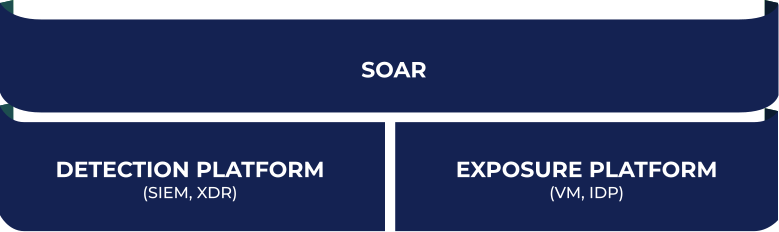


OT Resilience
Tesorion OT Resilience helps organizations in production environments such as manufacturing, food, energy and critical infrastructure to make their OT environments demonstrably resilient to cyber threats. We not only make organizations safer, but also bring them under executive control and strengthen their operational resilience.

Immunity
More than standard NAC
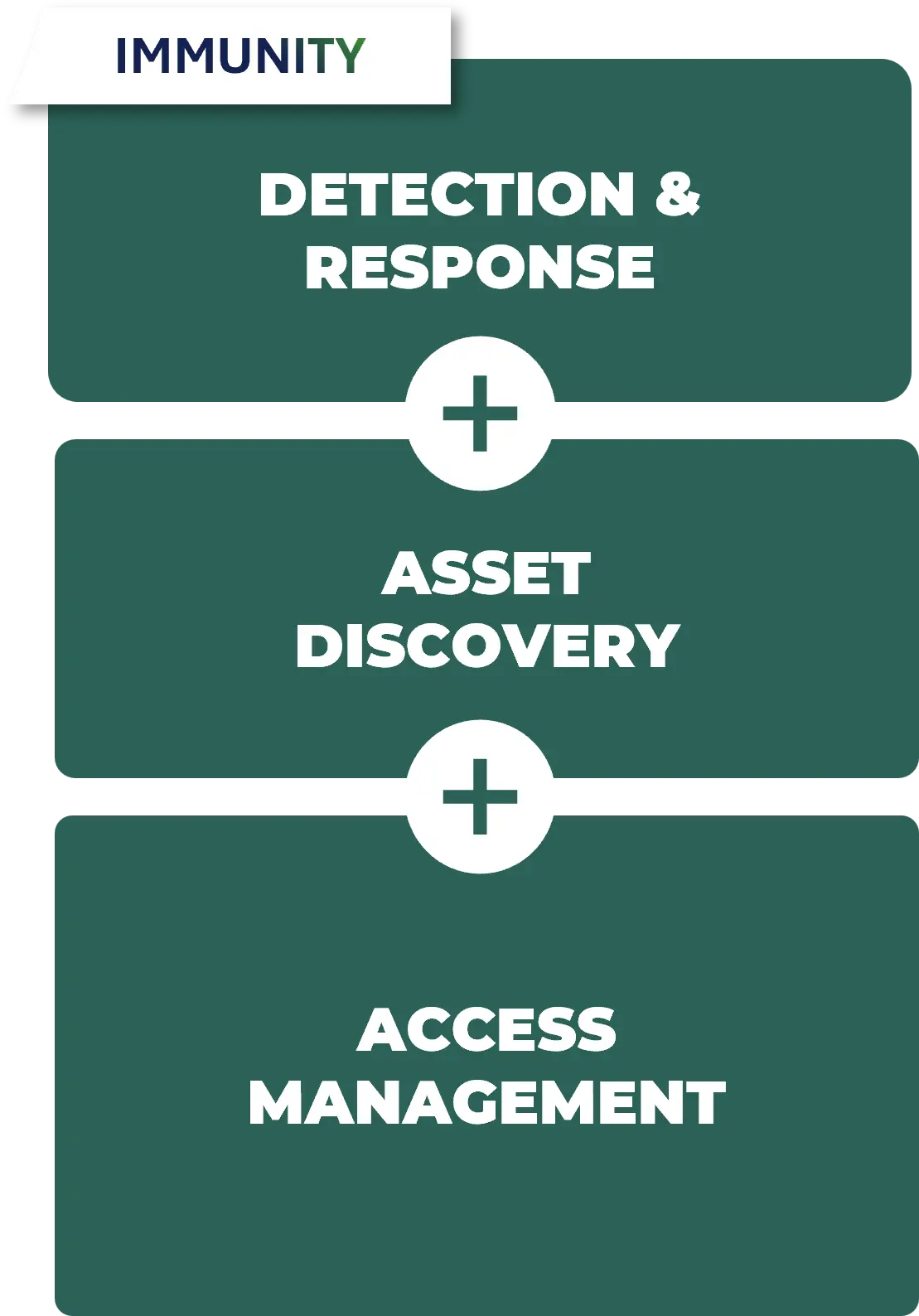
Tesorion Immunity combines Network Access Control with real-time Asset Discovery and Automated Detection & Response. This not only gives you control over who can access the network, but also insight into all connected devices and immediate threat protection – agentless and fully automatic.

At Tesorion, we believe that cyber maturity grows through collaboration. Our accessible specialists work side by side with your team every day to strengthen your organization's cyber maturity together. By joining forces from various cybersecurity disciplines, we provide an effective approach in predicting, preventing, detecting and responding to cyber threats.
Trusted by leading organizations










Sign up for the WakeUp Wednesday
Receive the latest malware and vulnerability updates in your inbox every Wednesday
More than 1,000 organizations have already joined us.